
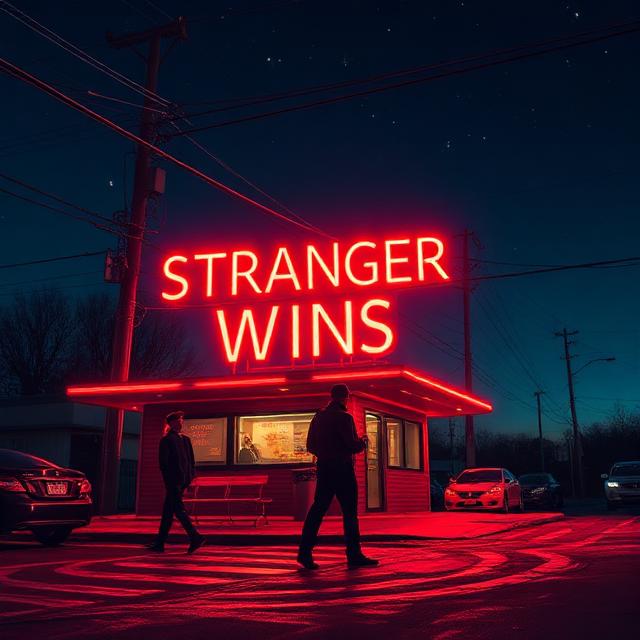
It was the kind of winter where two very different kinds of fans — one with foam fingers, the other curled up under blankets with snacks — felt something rare and astonishing at the same time. On the gridiron in Miami Gardens, the Indiana Hoosiers capped a perfect season with a 27-21 victory over the Miami Hurricanes to win the College Football Playoff National Championship, the first in program history and one of the most improbable title runs ever seen in college athletics. At virtually that same moment on streaming platforms, millions of viewers were finishing the final episodes of Stranger Things — the nostalgic, genre-defining epic set in the fictional Hawkins, Indiana, that concluded after five seasons and nearly a decade of cultural fascination.
Two endings. One real. One imagined. Both rooted in a version of Indiana that has spent much of its existence as an underdog — overlooked, underestimated, and brimming with untapped narrative power. And in the close of 2025, that underdog spirit seemed to roar to the forefront in both sports and storytelling.
For Hoosiers fans who have grown up hearing about decades of all-too-common losing seasons, the 2025 turnaround felt almost mythic. A program that only two years earlier finished 3–9 suddenly completed a perfect 16–0 season — a feat unmatched in modern college football — and claimed its first national championship. Quarterback Fernando Mendoza, a transfer from Cal, didn’t just lead his team; he rewrote the narrative of Indiana football. Along the way he became the first Hoosier ever to win the Heisman Trophy, guiding the team to wins over traditional bluebloods like Alabama and Oregon, and capping it all with that heart-pounding championship win over Miami. Mendoza’s stoic leadership, efficient play and that defining fourth-down, 12-yard touchdown run in the title game etched both his name and the Hoosiers’ name permanently into college football lore.
At the center of that improbable rise stands Curt Cignetti, the architect of Indiana’s transformation and the embodiment of its refusal to accept history as destiny. When Cignetti arrived in Bloomington, he didn’t promise miracles or lean on nostalgia; he brought a relentless belief in standards, accountability, and the quiet confidence of someone who had rebuilt programs before. He inherited a roster shaped by years of close losses and lowered expectations, and in remarkably short order reshaped its identity — not just schematically, but psychologically. Indiana stopped playing like a program hoping to hang around and started playing like one that expected to win. Cignetti’s genius wasn’t flash; it was clarity. Every week looked intentional. Every adjustment felt earned. He cultivated belief without bravado, toughness without fear, and unity without ego. In doing so, he didn’t just coach Indiana to a championship — he gave the program something far rarer: a new self-image. Much like the stories that endure longest, Cignetti’s legacy won’t be defined solely by a perfect record or a trophy, but by the moment Indiana football learned to see itself not as an underdog waiting for the ending to arrive, but as the author of its own.
This wasn’t just a banner year; it was a story. It was the kind of narrative arc that defies the math of recruiting rankings, payrolls, and preseason expectations. Indiana football has historically been one of the most loss-filled programs in FBS history — and yet in the span of 12 months they went from also-ran to undisputed champion. Commentary from analysts drew comparisons to some of sport’s most beloved Cinderella moments, likening Indiana’s improbable ascent to iconic stories like the “Miracle on Ice” or the 1969 New York Mets.
If Indiana’s athletic achievement was a shockwave through the sports world, Stranger Things was a cultural earthquake that finally arrived at its long-anticipated conclusion. When the series debuted in 2016, it seemed like a love letter to the ’80s: Spielbergian adventure, synth-rich horror, and a group of misfit kids trying to save their friend. But over its five seasons, it became so much more — a decade’s worth of collective imagination that held up a mirror to our own fascinations with friendship, fear, and the unknown.
From the beginning, the stakes were set low on the surface but enormous beneath it. When Will Byers disappeared into the Upside Down, an alternate, nightmarish mirror of Hawkins, his friends — Mike, Dustin, Lucas — refused to believe he was gone. Their belief led them to discover Eleven, the extraordinary girl with psychic powers who changed everything. Their journey to find Will became a story about connection, courage, and the lengths people will go to for those they love.
Over subsequent seasons, the mythology deepened: the Mind Flayer, the Demogorgons, the rifts that threatened to merge the Upside Down with the real world, and the personal traumas each character faced. Season after season, Stranger Things wove together supernatural horror with very human themes: loss, adolescence, sacrifice, and the painful, beautiful work of growing up.
By the time Season 5 — the show’s final installment — arrived, Stranger Things had become more than a genre show; it was part of the cultural lexicon. Its last episodes, collectively titled “The Rightside Up,” brought the story to a close with a massive confrontation against Vecna and the hive mind entity known as the Mind Flayer, culminating in the destruction of the Upside Down and the rescue of the captured children who had been central to Vecna’s plan to merge realities.
For long-time viewers, it was deeply emotional. Here were characters we watched grow up — graduating school, forming relationships, losing and finding each other — finally stepping out of Hawkins into lives beyond the shadow of the Upside Down. And in a final, poignant moment that bound series beginning to end, the narrative loops back to the familiar Dungeons & Dragons game in the Wheeler basement, echoing the very first scene that launched the entire phenomenon.
Yet even as the Upside Down collapsed and Hawkins seemed safe, the ending left its most crucial choice up to its audience: Did Eleven survive? The finale plays that moment on a gentle, interpretive pitch. In one version, El sacrifices herself to save the world. In another, shared through the belief of her friends, she may have escaped, hidden through the subterranean tunnels beneath Hawkins. That uncertainty — that belief against doubt — is the show’s final gift.
That parallel with the Hoosiers is striking. Indiana football’s rise from historical futility to being crowned national champions is a story not just of athletic excellence but of belief triumphing over expectation. Stranger Things, at its heart, has always been a tale of belief — in friendship, in courage, and in the idea that ordinary people (even kids) can confront overwhelming darkness and still choose hope at the end.
Consider the beautiful symmetry: in fictional Hawkins, a group of friends overturns cosmic terror through unity and resilience. In real-world Bloomington, a team once written off by the college football world overturned decades of losing to reach the pinnacle of its sport — reimagining what Indiana football could be. The Hoosiers’ first Big Ten title in nearly six decades, a decisive national title game win, and the first undefeated season in the modern era all attest to a narrative that almost feels screenplay-crafted in its improbability.
Yet it happened. And that’s part of the magic.
There’s something almost cinematic about how these two stories reached their finales almost in tandem. One brought an entire community — alumni, current students, and fans around the world — to tears of joy and disbelief on the field. The other brought legions of fans to tears of reflection and closure on couches and in theaters worldwide. The Hoosiers didn’t just win; they changed expectations. Stranger Things didn’t just end; it completed a narrative about overcoming the unimaginable.
Maybe that’s why the overlap feels right. Because both narratives, in their very different ways, were about underdogs — battered, bruised, or misunderstood — refusing to be confined by the limits others placed on them. One existed in the realm of fiction; the other in stadiums and living rooms. Yet both left us cheering, thinking, and believing that what we imagine can sometimes come true — that wonder, like a perfect season or a world saved from the Upside Down, is worth fighting for.
Neither story ends precisely where we might have expected — and perhaps that’s exactly what made each so unforgettable.
 The Agency