Category Archives: Sports & Entertainment

Breaking Sports News Roundup: LeBron James Chooses Philadelphia in Stunning Career Move

The King Heads East for One More Championship Run

The NBA world was shaken today as LeBron James announced his decision to join the Philadelphia 76ers, creating one of the most unexpected moves of his legendary career. After eight seasons with the Los Angeles Lakers, the four-time NBA champion is taking his talents back to the Eastern Conference for what could be the final chapter of his career.

At 41 years old, James made it clear that his decision was not about money or headlines—it was about competing for another championship. The NBA’s all-time leading scorer said he still believes he has more to give and wants another opportunity to chase basketball’s ultimate prize.

Philadelphia Lands a Superstar

The Sixers’ move immediately changes the NBA landscape. Pairing LeBron with Philadelphia’s existing talent gives the franchise a new level of championship experience, leadership, and star power.

For a team looking to compete at the highest level, adding a player with LeBron’s résumé brings:

  • Four NBA championships
  • Four MVP awards
  • Decades of playoff experience
  • One of the greatest basketball minds in league history

Philadelphia is betting that LeBron’s ability to control games, elevate teammates, and perform under pressure can help push the team closer to another title.

A New Chapter After Los Angeles

LeBron’s departure marks the end of an era in Los Angeles. During his time with the Lakers, he delivered a championship, became the NBA’s all-time leading scorer, and continued to redefine what was possible for an aging superstar.

Now, instead of walking away from the game, James is choosing one more challenge.

Why Philadelphia?

The Sixers offered LeBron something he has valued throughout his career: a legitimate chance to compete.

Rather than focusing on legacy alone, James appears focused on one final mission—winning another championship and proving he can still change the direction of a franchise.

The NBA Reacts

The move instantly became one of the biggest stories in sports. Fans, analysts, and players are already debating what this means for the championship race and whether Philadelphia has become one of the league’s top contenders.

One thing is certain: wherever LeBron James goes, the spotlight follows.

The Bottom Line

LeBron James choosing Philadelphia is more than just a free-agent decision—it’s another historic moment in one of the greatest careers sports has ever seen.

The King has entered a new kingdom. Now the question is simple:

Can LeBron James bring another championship to Philadelphia?

What Happened Today in 5 Minutes: Your Daily News Roundup

Date: July 26, 2026

If you’ve been busy all day, here’s a quick look at the biggest stories making headlines around the world.

🌍 International News

Wildfires continue to impact parts of France and Spain, forcing large-scale evacuations as firefighters battle difficult conditions fueled by hot, dry weather. Officials have warned that the situation remains dangerous, with thousands of residents displaced.

Meanwhile, Typhoon Noul has disrupted life across parts of China and Hong Kong, leading to hundreds of canceled flights and prompting more than 700,000 people to leave their homes as authorities respond to severe weather conditions.

🌐 Geopolitics

Tensions remain high in several regions around the world. International attention continues to focus on developments involving the Middle East and Eastern Europe, with governments closely monitoring security concerns and diplomatic efforts. Global leaders are calling for stability as multiple conflicts continue to evolve.

🏆 Sports

One of today’s biggest sports stories came from the World Matchplay Darts Championship, where Luke Littler successfully defended his title with a commanding victory over Gerwyn Price. Littler’s dominant performance further strengthens his reputation as one of the sport’s brightest stars.

🎬 Entertainment

Shark Week 2026 officially kicked off today with a lineup of new documentaries and specials exploring shark behavior, conservation, and marine science. The annual television event remains one of Discovery’s most popular summer attractions.

💼 Business Snapshot

Markets continue to monitor global economic conditions as investors watch geopolitical developments, inflation trends, and central bank policies. Analysts say uncertainty surrounding international events could continue influencing financial markets in the days ahead.

📌 The Bottom Line

Today’s headlines were shaped by extreme weather, ongoing geopolitical tensions, major sporting achievements, and new entertainment releases. As always, these stories continue to develop, so expect more updates over the coming days.

A Collision of Eras at Super Bowl LX

Super Bowl LX feels less like a game and more like a collision of eras, and fittingly, it brings the Seahawks and the Patriots back onto the same field where football history still echoes. A decade after their infamous last-second showdown, Seattle and New England meet again, not as ghosts of the past, but as fully reimagined contenders carrying old scars and new identities into the NFL’s grandest night.

Seattle arrives with a team that looks fast, mean, and unapologetically physical. This version of the Seahawks is built on controlled chaos—defensive speed that closes windows before quarterbacks even realize they’re open, and an offense that thrives on timing, balance, and punishing mistakes. They don’t just score; they wear teams down. Drives stretch defenses thin, the run game keeps linebackers honest, and when opponents start cheating forward, Seattle strikes vertically. It’s the kind of football that doesn’t always look flashy in highlights but wins championships when February rolls around.

New England, meanwhile, has once again done what New England always seems to do: reinvent itself just when the league decides it’s finally done. The Patriots’ path to Super Bowl LX hasn’t been loud, but it’s been relentless. Precision over panic. Situational mastery over spectacle. This team doesn’t beat you by overwhelming talent alone—it beats you by forcing you to play perfect football for four quarters, then punishing you the moment you don’t. Third downs, red-zone efficiency, clock control—New England owns the margins, and those margins decide championships.

The chess match is irresistible. Seattle’s defense thrives on disruption, disguising coverages and daring quarterbacks to hesitate for half a second too long. New England’s offense lives on discipline and timing, turning patience into a weapon. Something has to give. Either Seattle forces chaos into the Patriots’ rhythm, or New England slowly suffocates Seattle’s aggression by refusing to blink.

On the other side of the ball, the contrast is just as sharp. Seattle wants to dictate pace, leaning into physicality and tempo shifts, forcing defenders to tackle in space and recover on short rest. New England counters with adaptability, content to take what’s available early and adjust ruthlessly by the second half. This is the kind of Super Bowl where halftime feels like a reset button—and the team that adapts faster wins.

There’s history here, and both franchises know it. Seattle still carries the memory of one decision that changed everything. New England carries the legacy of a dynasty built on moments exactly like this. But Super Bowl LX isn’t about revenge or nostalgia. It’s about evolution. About which organization has best learned how to survive the modern NFL while honoring what made it great in the first place.

Expect tension. Expect long drives that feel like battles of will. Expect at least one moment that freezes the stadium into silence before exploding into chaos. This isn’t a blowout kind of Super Bowl—it’s a nerve-test. The kind where one mistake, one read, one second too late becomes the difference between lifting the Lombardi Trophy and watching someone else do it.

Super Bowl LX doesn’t promise closure. It promises something better: another chapter in a rivalry that refuses to stay in the past.

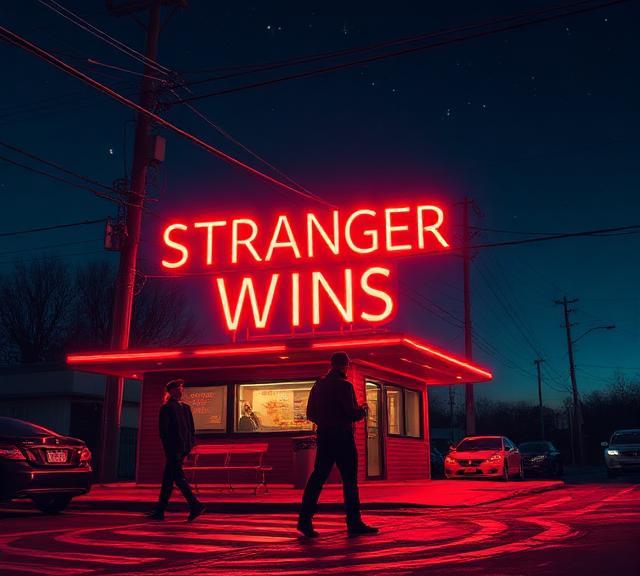
Stranger Wins

It was the kind of winter where two very different kinds of fans — one with foam fingers, the other curled up under blankets with snacks — felt something rare and astonishing at the same time. On the gridiron in Miami Gardens, the Indiana Hoosiers capped a perfect season with a 27-21 victory over the Miami Hurricanes to win the College Football Playoff National Championship, the first in program history and one of the most improbable title runs ever seen in college athletics. At virtually that same moment on streaming platforms, millions of viewers were finishing the final episodes of Stranger Things — the nostalgic, genre-defining epic set in the fictional Hawkins, Indiana, that concluded after five seasons and nearly a decade of cultural fascination.

Two endings. One real. One imagined. Both rooted in a version of Indiana that has spent much of its existence as an underdog — overlooked, underestimated, and brimming with untapped narrative power. And in the close of 2025, that underdog spirit seemed to roar to the forefront in both sports and storytelling.

For Hoosiers fans who have grown up hearing about decades of all-too-common losing seasons, the 2025 turnaround felt almost mythic. A program that only two years earlier finished 3–9 suddenly completed a perfect 16–0 season — a feat unmatched in modern college football — and claimed its first national championship. Quarterback Fernando Mendoza, a transfer from Cal, didn’t just lead his team; he rewrote the narrative of Indiana football. Along the way he became the first Hoosier ever to win the Heisman Trophy, guiding the team to wins over traditional bluebloods like Alabama and Oregon, and capping it all with that heart-pounding championship win over Miami. Mendoza’s stoic leadership, efficient play and that defining fourth-down, 12-yard touchdown run in the title game etched both his name and the Hoosiers’ name permanently into college football lore.

At the center of that improbable rise stands Curt Cignetti, the architect of Indiana’s transformation and the embodiment of its refusal to accept history as destiny. When Cignetti arrived in Bloomington, he didn’t promise miracles or lean on nostalgia; he brought a relentless belief in standards, accountability, and the quiet confidence of someone who had rebuilt programs before. He inherited a roster shaped by years of close losses and lowered expectations, and in remarkably short order reshaped its identity — not just schematically, but psychologically. Indiana stopped playing like a program hoping to hang around and started playing like one that expected to win. Cignetti’s genius wasn’t flash; it was clarity. Every week looked intentional. Every adjustment felt earned. He cultivated belief without bravado, toughness without fear, and unity without ego. In doing so, he didn’t just coach Indiana to a championship — he gave the program something far rarer: a new self-image. Much like the stories that endure longest, Cignetti’s legacy won’t be defined solely by a perfect record or a trophy, but by the moment Indiana football learned to see itself not as an underdog waiting for the ending to arrive, but as the author of its own.

This wasn’t just a banner year; it was a story. It was the kind of narrative arc that defies the math of recruiting rankings, payrolls, and preseason expectations. Indiana football has historically been one of the most loss-filled programs in FBS history — and yet in the span of 12 months they went from also-ran to undisputed champion. Commentary from analysts drew comparisons to some of sport’s most beloved Cinderella moments, likening Indiana’s improbable ascent to iconic stories like the “Miracle on Ice” or the 1969 New York Mets.

If Indiana’s athletic achievement was a shockwave through the sports world, Stranger Things was a cultural earthquake that finally arrived at its long-anticipated conclusion. When the series debuted in 2016, it seemed like a love letter to the ’80s: Spielbergian adventure, synth-rich horror, and a group of misfit kids trying to save their friend. But over its five seasons, it became so much more — a decade’s worth of collective imagination that held up a mirror to our own fascinations with friendship, fear, and the unknown.

From the beginning, the stakes were set low on the surface but enormous beneath it. When Will Byers disappeared into the Upside Down, an alternate, nightmarish mirror of Hawkins, his friends — Mike, Dustin, Lucas — refused to believe he was gone. Their belief led them to discover Eleven, the extraordinary girl with psychic powers who changed everything. Their journey to find Will became a story about connection, courage, and the lengths people will go to for those they love.

Over subsequent seasons, the mythology deepened: the Mind Flayer, the Demogorgons, the rifts that threatened to merge the Upside Down with the real world, and the personal traumas each character faced. Season after season, Stranger Things wove together supernatural horror with very human themes: loss, adolescence, sacrifice, and the painful, beautiful work of growing up.

By the time Season 5 — the show’s final installment — arrived, Stranger Things had become more than a genre show; it was part of the cultural lexicon. Its last episodes, collectively titled “The Rightside Up,” brought the story to a close with a massive confrontation against Vecna and the hive mind entity known as the Mind Flayer, culminating in the destruction of the Upside Down and the rescue of the captured children who had been central to Vecna’s plan to merge realities.

For long-time viewers, it was deeply emotional. Here were characters we watched grow up — graduating school, forming relationships, losing and finding each other — finally stepping out of Hawkins into lives beyond the shadow of the Upside Down. And in a final, poignant moment that bound series beginning to end, the narrative loops back to the familiar Dungeons & Dragons game in the Wheeler basement, echoing the very first scene that launched the entire phenomenon.

Yet even as the Upside Down collapsed and Hawkins seemed safe, the ending left its most crucial choice up to its audience: Did Eleven survive? The finale plays that moment on a gentle, interpretive pitch. In one version, El sacrifices herself to save the world. In another, shared through the belief of her friends, she may have escaped, hidden through the subterranean tunnels beneath Hawkins. That uncertainty — that belief against doubt — is the show’s final gift.

That parallel with the Hoosiers is striking. Indiana football’s rise from historical futility to being crowned national champions is a story not just of athletic excellence but of belief triumphing over expectation. Stranger Things, at its heart, has always been a tale of belief — in friendship, in courage, and in the idea that ordinary people (even kids) can confront overwhelming darkness and still choose hope at the end.

Consider the beautiful symmetry: in fictional Hawkins, a group of friends overturns cosmic terror through unity and resilience. In real-world Bloomington, a team once written off by the college football world overturned decades of losing to reach the pinnacle of its sport — reimagining what Indiana football could be. The Hoosiers’ first Big Ten title in nearly six decades, a decisive national title game win, and the first undefeated season in the modern era all attest to a narrative that almost feels screenplay-crafted in its improbability.

Yet it happened. And that’s part of the magic.

There’s something almost cinematic about how these two stories reached their finales almost in tandem. One brought an entire community — alumni, current students, and fans around the world — to tears of joy and disbelief on the field. The other brought legions of fans to tears of reflection and closure on couches and in theaters worldwide. The Hoosiers didn’t just win; they changed expectations. Stranger Things didn’t just end; it completed a narrative about overcoming the unimaginable.

Maybe that’s why the overlap feels right. Because both narratives, in their very different ways, were about underdogs — battered, bruised, or misunderstood — refusing to be confined by the limits others placed on them. One existed in the realm of fiction; the other in stadiums and living rooms. Yet both left us cheering, thinking, and believing that what we imagine can sometimes come true — that wonder, like a perfect season or a world saved from the Upside Down, is worth fighting for.

Neither story ends precisely where we might have expected — and perhaps that’s exactly what made each so unforgettable.
L.A.’s Balancing Act: Star Power, Identity and the 2025-26 Lakers

The 2025-26 Los Angeles Lakers season has unfolded as a compelling blend of high expectations, star power and the unpredictable reality that comes with weaving together a new identity. Coming off a 50-win campaign in 2024-25 that ended in a frustrating first-round playoff exit, the franchise made bold moves to reshape its roster and maximize its championship window. Central to that transformation was locking in two cornerstone superstars: Luka Dončić, who agreed to a multi-year extension with the Lakers, and LeBron James, who exercised his player option to return for an historic 23rd NBA season, a milestone the league is celebrating with a special jersey patch worn throughout the year. Their union — combining Dončić’s explosive scoring and creative playmaking with James’ veteran presence and all-around excellence — was meant to signal that Los Angeles was no longer rebuilding but fully committed to contending at the highest level.

The Lakers’ offseason roster overhaul reflected that urgency. In addition to retaining Dončić and James, Los Angeles added impactful pieces like Deandre Ayton, a traditional big man brought in to anchor the interior, and Marcus Smart, a veteran guard prized for his defensive intensity and leadership. They also welcomed forward Jake LaRavia for depth and flexibility off the bench while integrating new talent like draft pick Adou Thiero. Early in the season, however, the Lakers were tested by adversity. James missed the start of the campaign with a nerve-related injury, forcing Dončić and the supporting cast to shoulder a heavier offensive burden and build chemistry without their most influential leader alongside them. Despite this challenge, Dončić’s historical performances in October — including record-setting 40-point games out of the gate — underscored his ability to carry the team and helped establish a strong foundation that carried into the regular season.

As the regular season progressed into January, the Lakers sat atop the Pacific Division with a 24-14 record, a position that reflects both offensive firepower and moments of inconsistency. Dončić continued to lead the team statistically, averaging well over 30 points per game while also topping assists, illustrating his central role in orchestrating Los Angeles’ attack. Meanwhile, Ayton provided solid rebounding and physical presence, and Austin Reaves, before missing time due to injury, offered reliable scoring and spacing. Despite the bright spots, recent stretches have seen the Lakers “cool off” after a hot start, prompting discussions among fans and commentators about where improvements are needed.

Los Angeles’ play has been defined by extremes: dominant offensive outputs one night and frustrating defensive lapses the next. This oscillation was on full display in a recent game against the Sacramento Kings, where despite a 42-point outing from Dončić, the Lakers were defeated 124-112 as their three-point shooting struggled and defensive rotations failed to slow Sacramento’s attack. Such losses have extended their slump and highlighted the team’s ongoing battle to find consistency on both ends of the court. In response, the front office has been active — signing Kobe Bufkin to a 10-day contract to bolster bench scoring during a demanding part of the schedule — and rumors swirl about potential trade strategies that could reshape the roster before the deadline.

Off the court, the narrative around this Lakers season has been equally rich. James’ pursuit of NBA history, now enshrined with the commemorative jersey patch celebrating his unprecedented career longevity, has captivated both Lakers faithful and casual fans alike. Meanwhile, developing storylines around players like Bronny James, who has seen playing time in the Lakers’ G League affiliate as part of his growth trajectory, offer a reminder of the franchise’s blend of established icons and emerging prospects. These personal arcs, intertwined with the team’s collective aspirations, create a layered narrative that extends beyond wins and losses.

Yet even with all this star talent, the Lakers’ season has also been punctuated by moments of self-reflection and external critique. Analysts have noted that while Los Angeles can pull off impressive offensive performances, its defensive identity remains elusive, and without tightening up in that area, deep playoff success could remain out of reach. The team’s ability to win close games has been a strong indicator of resilience, but there is a widespread understanding in NBA circles that consistency — particularly against elite competition — is the hallmark of true title contenders. Such insights are driving conversations about whether the Lakers should pursue additional perimeter defenders or rim protectors ahead of the trade deadline, balancing the need to maintain their current chemistry with the imperative to improve where they are vulnerable.

As the regular season races toward the All-Star break and the looming trade deadline, the Lakers embody a fascinating blend of promise and uncertainty. Their position at the top of the Pacific Division reflects a successful evolution from last year, but the lingering slump and defensive questions remind fans that a championship chase is never without hurdles. Through it all, the spotlight remains firmly on Dončić and James — two of the most consequential players of their generation — as they seek to write a new chapter in Lakers history together. Whether this season culminates in a deep playoff run or prompts further roster evolution, it has already proved to be one of the most compelling and discussed campaigns in recent memory for the storied franchise.